
Why Curtains Smell Even After Washing: Hidden Causes Most People Don’t Know
Many homeowners are surprised when curtains still smell even after being washed. This is a very common issue, especially in Malaysia, where high humidity and warm temperatures make fabrics harder to fully dry and keep fresh. In most cases, the problem is not about “dirty washing” but hidden moisture, trapped particles, and incorrect cleaning methods. This is why many homeowners eventually turn to a professional curtain cleaning service in Malaysia for deeper and more effective results.
Below is a detailed breakdown of the most common causes and what is actually happening inside your curtains.
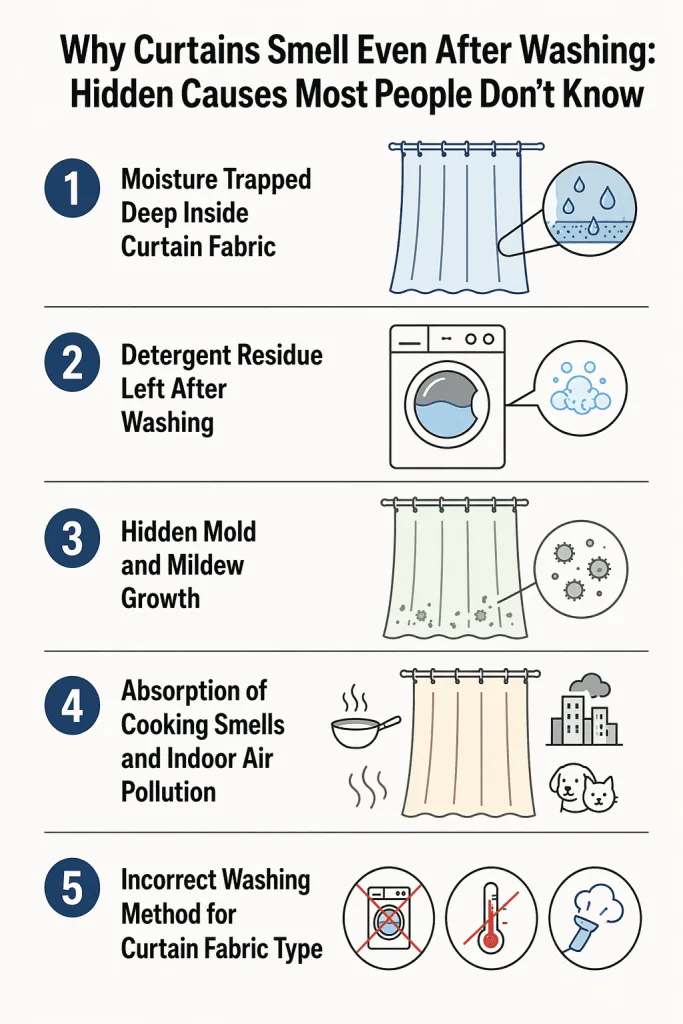
1. Moisture Trapped Deep Inside Curtain Fabric
Curtains often look dry on the surface but still contain moisture inside the layers.
- Thick fabrics like blackout or velvet trap water inside inner fibers
- Sun drying may dry the outer layer but not the inner folds
- Indoor drying with poor airflow slows evaporation significantly
- Folded or layered curtains retain damp pockets of moisture
- Lingering moisture produces a musty or damp smell over time
In Malaysia’s humid weather, this problem becomes worse because the air itself already contains high moisture levels, making complete drying more difficult.
2. Detergent Residue Left After Washing
Many people use too much detergent or rinse curtains insufficiently during washing.
- Soap particles remain trapped in fabric fibres after washing
- Residue mixes with humidity and creates a sour or stale smell
- Handwashing often leads to uneven rinsing in thick areas
- Washing machines may not fully rinse large curtain loads properly
- Build-up of detergent attracts dust and bacteria over time
This is why professional curtain cleaning services in Malaysia often use controlled rinse cycles to ensure no chemical residue remains in the fabric.
3. Hidden Mold and Mildew Growth
Mold is one of the most overlooked causes of curtain odour, especially in damp environments.
- Mold grows in areas that stay damp for long periods
- Common in curtain hems, pleats, and thick stitching lines
- Indoor drying without ventilation increases mold risk
- Mold can continue producing odour even after washing
- Early mold growth may not be visible but still smells strongly
Once mold spreads inside fabric layers, regular washing may not be enough to fully remove the smell.
4. Absorption of Cooking Smells and Indoor Air Pollution
Curtains act like large fabric filters inside your home.
- Absorb cooking fumes, especially oil and frying smoke
- Trap airborne grease particles from kitchen activities
- Collect dust, pet odours, and everyday household smells
- Urban pollution in cities like Kuala Lumpur and Penang adds extra contamination
- Over time, these particles become embedded in fabric fibres
Even after washing, deeply absorbed particles may still release odours slowly.
5. Incorrect Washing Method for Curtain Fabric Type
Different curtain materials require different cleaning approaches.
- Polyester curtains may tolerate machine washing
- Silk, linen, or blackout fabrics often need specialised care
- High heat washing can damage fibres and trap odours inside
- Wrong cleaning method may not fully remove deep-seated smells
- Some fabrics require steam cleaning or dry cleaning instead of water washing
Using the wrong method can make odour problems worse instead of solving them.
Curtain Odour Causes at a Glance
| Cause | What Happens | Resulting Smell Type | Common Mistake |
|---|---|---|---|
| Trapped moisture | Water remains inside thick layers | Musty or damp smell | Incomplete drying |
| Detergent residue | Soap not fully rinsed out | Sour or chemical smell | Overusing detergent |
| Mold growth | Fungal growth in damp areas | Strong earthy or mildew smell | Poor ventilation during drying |
| Air pollution absorption | Curtains trap airborne particles | Greasy or stale smell | Rare deep cleaning |
| Incorrect washing method | Fabric not properly treated | Mixed or persistent odour | Using wrong cleaning method |
Why Curtain Odours Are More Common in Malaysia
Malaysia’s climate plays a major role in this issue.
- High humidity slows drying time significantly
- Frequent rain limits sun-drying opportunities
- Air conditioning creates condensation in fabric layers
- Urban pollution increases fabric exposure to odours
- Homes often rely on indoor drying due to weather conditions
These factors combine to make curtain maintenance more difficult compared to drier climates.
When Professional Curtain Cleaning Is the Better Option
Professional cleaning is recommended when:
- Odour returns shortly after washing
- Curtains are heavy, layered, or blackout type
- There is suspected mold or mildew
- Fabric is delicate or expensive
- Home washing does not fully remove smell
Professional cleaning ensures deep extraction of moisture, residue, and embedded pollutants using controlled methods and proper drying systems.
Get Fresh, Odour-Free Curtains Today
If your curtains still smell after washing, professional cleaning from PT Clean can remove hidden moisture, mould, and deep-seated odours for a truly fresh finish.
Book PT Clean’s professional curtain cleaning service in Kuala Lumpur & Selangor
Conclusion
Curtains smell even after washing due to hidden issues such as trapped moisture, detergent residue, mold growth, indoor pollution, and incorrect cleaning methods. In Malaysia’s humid environment, these problems are even more common and difficult to manage without proper care.
Understanding these causes helps homeowners make better cleaning decisions and maintain a fresher, healthier indoor environment for longer with proper curtain cleaning service in Malaysia.
Frequently Asked Questions
Curtains can still smell after washing due to trapped moisture, detergent residue, hidden mould, or absorbed odours from cooking fumes and indoor air pollution. These issues often sit deep inside the fabric and are not removed by surface cleaning alone.
No, it usually means the curtains were not fully dried or were dried in a humid, low-airflow environment. Musty smells often indicate moisture trapped inside thick fabric layers or early mould growth.
Sometimes a second wash helps, but if the smell is caused by mould, deep residue, or pollution build-up, home washing may not fully remove it. In such cases, professional curtain cleaning is more effective.
Professional cleaning uses deep fabric treatment, controlled washing, and proper drying techniques to remove trapped moisture, bacteria, detergent residue, and embedded odours that normal washing cannot reach.
In Malaysia’s humid climate, curtains should ideally be deep cleaned every 6 to 12 months, depending on exposure to dust, cooking fumes, and indoor air conditions. Regular cleaning helps prevent odour build-up and mould growth.
Disclaimer Statement
We hope you found this article helpful. The information provided is for general cleaning guidance only and may not cover all situations. While we strive for accuracy, results may vary depending on factors such as materials used and cleaning methods applied. We cannot guarantee that all information is error-free. PT Clean Services assumes no responsibility for any errors or omissions. For the best results, we recommend hiring experts such as PT Clean Services. We offer tailored solutions to meet your needs. If you require assistance, explore our cleaning services.
We are at your service.