
Aircond Using Too Much Electricity? Here’s Why and How to Fix It (2026 Guide)
If your electricity bill has increased even though your daily routine has not changed, your air conditioner is one of the most likely causes.
In Malaysia’s hot and humid climate, air conditioners often run for long hours every day. When the system is not operating efficiently, it can consume significantly more electricity without delivering better cooling.
In most cases, this is not caused by age alone, but by maintenance issues, airflow restriction, or system inefficiency that gradually develops over time.
This guide explains the real reasons your aircond may be consuming too much electricity, how to identify the problem, and what you can do to reduce your bill effectively.
Why Aircond Electricity Bills Increase Over Time
Most homeowners assume higher bills mean:
- aircond is old
- electricity tariff increased
- or usage increased
However, in real cases, the issue is often reduced system efficiency.
When airflow is restricted or heat exchange is affected, the compressor must run longer to reach the same temperature. Since the compressor is the highest energy-consuming component, even small inefficiencies can lead to noticeable bill increases.
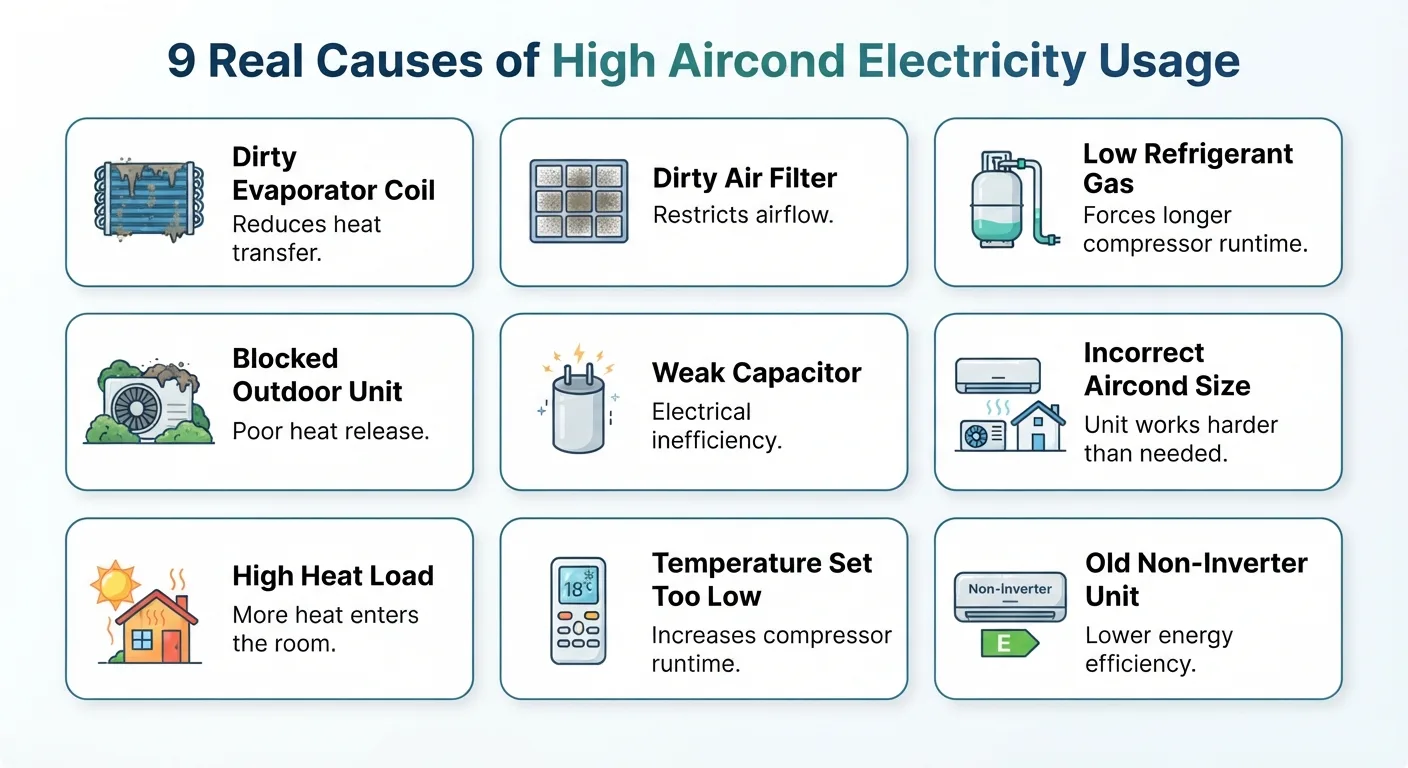
Real Causes of High Aircond Electricity Usage
1. Dirty Evaporator Coil (Hidden Efficiency Loss)
The evaporator coil is responsible for absorbing heat from indoor air. Over time, dust, grease, and mould can accumulate inside the coil fins, reducing heat transfer efficiency.
When this happens, the system needs longer running cycles to cool the same space, which directly increases electricity consumption.
HVAC performance research indicates that coil fouling can reduce system efficiency by around 5% or more in residential conditions, with higher losses in poorly maintained systems.
2. Dirty Air Filter (Airflow Restriction)
A clogged air filter is one of the simplest but most commonly overlooked causes of rising electricity bills.
When airflow is restricted, the system struggles to circulate cool air efficiently. As a result, the compressor has to run longer to achieve the desired temperature.
HVAC efficiency studies show that a dirty air filter can increase energy consumption by approximately 5% to 15%, depending on usage and the level of blockage.
Even a slightly dirty filter, if left uncleaned for weeks or months, can gradually increase monthly electricity usage.
3. Low Refrigerant Gas
Refrigerant gas is responsible for transferring heat out of your room.
When gas levels are low due to leakage, the system cannot absorb heat efficiently. The compressor compensates by running longer and more frequently.
A key insight many homeowners miss is that electricity bills often increase before obvious cooling problems appear, which makes this issue easy to overlook.
4. Blocked Outdoor Condenser Unit
The outdoor unit is responsible for releasing heat absorbed from indoors.
If airflow around the unit is restricted due to dust buildup, poor placement, or limited ventilation (common in high-rise buildings and condo balconies), heat cannot be released effectively.
This forces the entire system to work harder, increasing compressor runtime and electricity usage.
5. Weak Capacitor or Electrical Strain
The capacitor supports the compressor during startup and normal operation.
When it begins to weaken, the system becomes less stable, leading to:
- longer operating cycles
- inconsistent cooling performance
- gradual increase in electricity consumption
This issue is often mistaken for a cleaning problem, when in fact it is electrical in nature.
6. Incorrect Aircond Size for the Room
If the aircond capacity does not match the room size:
- undersized units will run continuously without reaching target temperature
- oversized units will cycle inefficiently and waste energy
Both situations result in unnecessary electricity consumption, especially in renovated or repurposed spaces.
7. Heat Load in the Room
Sometimes the aircond is not the main issue. The room itself may be generating excessive heat.
Common contributors include:
- direct sunlight through windows
- poor insulation
- multiple heat-generating appliances
Even a well-maintained aircond will struggle if the indoor heat load is too high.
8. Incorrect Temperature Settings
Setting the temperature too low does not cool the room faster.
Instead, it only forces the compressor to run longer than necessary, which increases electricity consumption.
For most Malaysian homes, a comfortable and efficient range is: 24°C to 26°C
9. Non-Inverter or Older Systems
Older aircond systems, especially non-inverter models, generally consume more electricity due to less efficient compressor operation.
However, in many cases, poor maintenance has a greater impact on electricity usage than age alone.
This is why a proper inspection is important before assuming replacement is necessary.
Quick 5-Minute Efficiency Check
Before spending money on repairs or a new unit, you can do a quick self-check to identify early signs of inefficiency.
| Check | What a Healthy Unit Looks Like |
|---|---|
| Air filter | Clean and not visibly clogged with dust |
| Cooling speed | Room becomes noticeably cooler within 10–15 minutes |
| Outdoor unit | Clear of dust and obstructions, with good airflow around it |
| Sound | Steady running sound without buzzing, rattling, or grinding |
| Pipes / indoor unit | No visible ice formation |
If two or more items look abnormal, your system is likely operating inefficiently and may require professional servicing.
When to Call a Professional
You should arrange inspection if:
- electricity bill has increased for 1–2 months
- cooling takes longer than usual
- ice or moisture appears on pipes
- cleaning does not improve performance
At this stage, the issue may require:
- chemical cleaning
- gas pressure inspection
- or component diagnosis
Energy-Saving Aircond Options (What You Should Look For)
If your goal is to reduce electricity bills, choosing the right aircond is important — but choosing the right system setup is even more critical.
What Makes an Aircond Energy Efficient?
- Inverter compressor technology
- Correct room-to-horsepower sizing
- Proper installation and airflow setup
Without these three, even a premium aircond will consume more electricity than expected.
Popular Energy-Efficient Aircond Brands in Malaysia
Daikin
- Strong inverter technology
- Stable long-term performance
- Widely used in residential and commercial buildings
Panasonic
- ECONAVI energy-saving sensors
- Nanoe™ air purification system
Mitsubishi Electric
- High durability
- Efficient cooling in tropical climates
LG
- Smart inverter control systems
- Good energy efficiency in mid-range models
Energy Label Tip (Malaysia)
Always check for:
- 4-star or 5-star energy rating
- Energy Commission Malaysia approval label
These indicate better energy performance under standard testing conditions.
How to Reduce Your Aircond Electricity Bill
Recommended maintenance schedule:
- Every 2–3 weeks: clean air filter
- Every 3 months: standard aircond servicing
- Every 6–12 months: chemical or overhaul cleaning
- Ongoing: maintain airflow around outdoor unit
Key Takeaway
High aircond electricity usage is usually not caused by a single issue.
In most cases, it is the result of:
- reduced airflow
- coil contamination
- refrigerant inefficiency
- or system strain over time
The most reliable way to reduce your electricity bill is not guessing, but getting a proper diagnosis and targeted servicing.
Get Your Aircond Running Efficiently Again
If your electricity bill keeps increasing, your aircond may need proper servicing or inspection.
PT Clean provides professional aircond servicing across Kuala Lumpur, Selangor, Cheras, and nearby areas to help restore cooling efficiency and reduce unnecessary power usage.
Frequently Asked Questions
In many cases, standard servicing only covers basic cleaning. If your evaporator coil is still dirty, refrigerant gas is low, or the outdoor unit is blocked, the system will continue to run longer and consume more electricity even after a service.
Yes. When airflow is restricted or heat transfer is affected, the compressor needs to run longer to achieve the same temperature. This increases electricity usage over time, even if cooling still feels normal.
The most common causes are a dirty evaporator coil, clogged air filter, and low refrigerant gas. These issues reduce efficiency and force the system to work harder than necessary.
Yes, in cases where the coil is heavily contaminated. A chemical wash helps restore proper heat exchange and airflow, which can improve efficiency and reduce unnecessary energy usage.
Inverter systems are generally more efficient, but performance still depends on proper sizing, installation quality, and maintenance. A poorly maintained inverter unit can still consume more electricity than expected.
For most homes in Malaysia, a standard service is recommended every 3 to 4 months, while a chemical wash is usually needed every 6 to 12 months depending on usage and environment.
Not always necessary to replace. Many cases are caused by maintenance issues or minor faults. A proper inspection is recommended first before deciding on replacement.
Disclaimer Statement
We hope you found this article helpful. The information provided is for general cleaning guidance only and may not cover all situations. While we strive for accuracy, results may vary depending on factors such as materials used and cleaning methods applied. We cannot guarantee that all information is error-free. PT Clean Services assumes no responsibility for any errors or omissions. For the best results, we recommend hiring experts such as PT Clean Services. We offer tailored solutions to meet your needs. If you require assistance, explore our cleaning services.
We are at your service.